
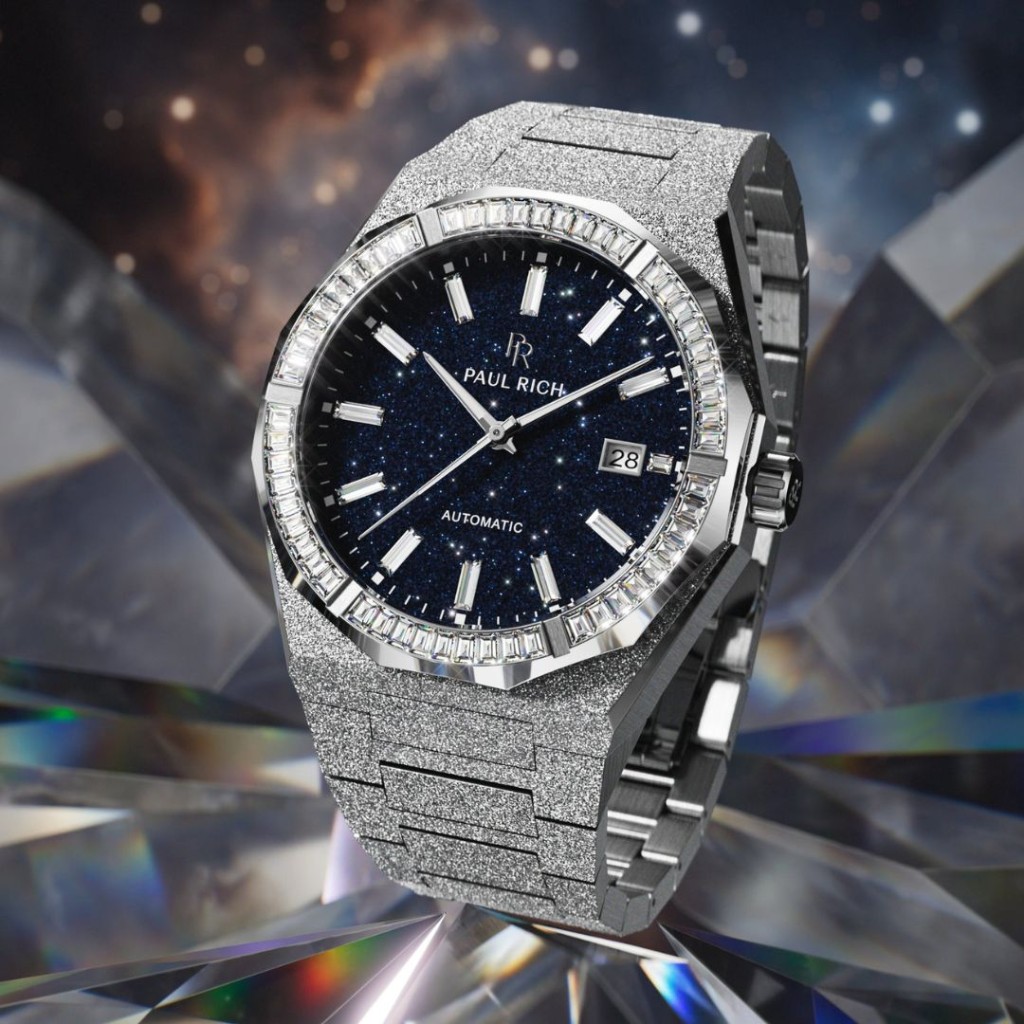
An iced out Audemars Piguet watch is a Royal Oak or Royal Oak Offshore set with diamonds or diamond-simulant stones across its bezel, dial, or bracelet — and in the replica market, they are among the most demanded builds. A bust down AP takes the concept further: the entire case, bezel, and every link of the bracelet are pave-set with stones. This guide explains the difference, which stones are worth buying, how much each tier costs, and how to spot a quality build versus a marketing photo. If you’re new to AP replicas, start with the complete Audemars Piguet replica guide first.
Key Takeaways
- Iced out = stones on visible surfaces. Bust down = fully pave-set across case, bezel, and bracelet.
- Lab-grown diamonds are the current default on quality builds and look identical to natural diamonds.
- CZ stones fade within a year and belong only on budget builds under $500.
- A quality iced out AP replica costs $1,200–$2,500; a bust down build runs $1,500–$3,500.
- Prong-set and channel-set are the two most durable styles; pave is the bust down standard.
- No ultrasonic cleaners — stones can loosen. Use warm soapy water and a soft brush.
- Genuine iced out AP Royal Oaks have sold at auction for over $200,000.
What Does “Iced Out” Mean on an AP Replica?
An iced out AP replica is a watch where diamonds or diamond-simulant stones have been set into the bezel, dial, or bracelet. The term comes from hip-hop culture and refers to a watch that is heavily stoned rather than left in its factory-finished metal.
On an Audemars Piguet specifically, “iced out” usually means one of three configurations:
- Bezel-only — stones on the octagonal bezel only. Most common, most versatile, closest to some genuine AP diamond-set references.
- Bezel and dial — stones on the bezel and around the dial (sometimes fully covered, sometimes only at the hour markers).
- Bezel, dial, and bracelet — this is where “iced out” starts to overlap with “bust down.”
The stones themselves are typically round brilliant cuts, sized between 1.0mm and 2.5mm depending on the surface. Larger stones (3mm+) appear on higher-end builds and cost significantly more.
What Is a Bust Down AP?
A bust down AP is an iced out AP taken to its fullest extent: the entire case, bezel, and bracelet are pave-set with stones. There is no visible bare metal on the front or sides of the watch.
The term “bust down” originated in hip-hop and refers to a watch that has been “busted down” — dismantled and rebuilt — so that stones can be set into every available surface. A true bust down build involves:
- Removing the bracelet from the case
- Removing each individual link for setting
- Setting stones in the case sides, lugs, and crown guards
- Reassembling and re-polishing the watch
The result is a watch that appears to be made of diamonds rather than metal.
Iced out vs bust down, at a glance:
| Feature | Iced Out | Bust Down |
|---|---|---|
| Bezel | Often set | Always set |
| Dial | Sometimes set | Usually set |
| Case sides | Rarely set | Always set |
| Bracelet | Sometimes set | Fully pave-set |
| Stone count | 200–800 | 1,500–3,500+ |
| Price | $1,200–$2,500 | $1,500–$3,500+ |
| Wearability | Daily with care | Event / occasional |
Natural Diamonds vs Lab Diamonds vs CZ
The stone tier is the single biggest driver of price and quality.
Natural diamonds. Mined diamonds. In the replica market they are rare and expensive — a full natural-diamond bust down on a Royal Oak would cost near what a genuine steel Royal Oak costs. Most sellers who claim “natural” at a $1,500 price are misrepresenting lab-grown stones.
Lab-grown diamonds. Chemically, physically, and optically identical to natural diamonds. Same hardness (10 on the Mohs scale), same brilliance, same fire. They cost 60–80% less than natural. Quality replica builders default to lab-grown.
Cubic zirconia (CZ). A synthetic diamond simulant. Brighter than diamonds in flash photos but loses brilliance within 6–12 months as the surface scratches. Chips easily. Only appropriate for sub-$500 builds.
Moissanite. A middle tier — harder than CZ, almost as brilliant as diamond, slightly more “rainbow” fire. Occasionally appears in replica builds around $700–$1,000.
| Stone | Hardness (Mohs) | Brilliance vs Diamond | Durability | Typical Price Tier |
|---|---|---|---|---|
| Natural diamond | 10 | 100% | Lifetime | $3,000+ |
| Lab diamond | 10 | 100% | Lifetime | $1,200–$3,000 |
| Moissanite | 9.25 | ~95% (more fire) | Long | $700–$1,000 |
| CZ | 8.5 | ~85% (fades) | 6–18 months | $200–$500 |
Setting Styles: Prong, Channel, and Pave
How stones are held in place determines durability, appearance, and price.
Prong setting. Each stone is held by small metal claws. Maximum light enters the stone, so brilliance is highest. Prongs can catch on clothing and, if bent, release the stone. Common on bezels.
Channel setting. Stones sit in a metal channel with no visible prongs. Flush, smooth, and highly durable. Common on bracelet links and case sides.
Pave setting. Stones are set closely together with minimal visible metal between them, creating a continuous diamond surface. This is the standard for bust down builds. Requires the most labor and is the most expensive to execute well.
Bezel setting. A metal rim wraps around each stone. The most protective setting but the least brilliant, since the metal blocks light.
For a bust down, expect a mix: pave across the top surfaces, channel on the sides and bracelet links, prong on the largest accent stones.
Iced Out Royal Oak vs Royal Oak Offshore
The two AP lines serve different buyers when iced.
- Royal Oak (37–41mm). The integrated bracelet makes it harder to set, and the octagonal bezel is the natural focal point. Iced Royal Oaks tend to be more “dressy” and are often set bezel-only. See our AP Royal Oak replica guide for reference details.
- Royal Oak Offshore (42–44mm). Larger surfaces mean more stone coverage and a bolder look. The rubber strap on many Offshores cannot be set, so iced Offshores usually keep a rubber or leather strap and stone only the case and bezel. Full details in the AP Royal Oak Offshore replica guide.
For smaller wrists and dressier builds, the Royal Oak 33mm and 37mm references (67651, 15451) are the most-iced in the replica market. See the Ladies Royal Oak collection for currently available pieces.
Cost Breakdown: What Drives the Price
The price of an iced out or bust down AP replica depends on five factors:
- Base watch tier — a super clone base ($550–$900) with clone 3120 movement is the starting point for any quality iced build.
- Stone type — lab diamond is 2–4× the cost of CZ; natural is 5–10× lab.
- Total carat weight — 1.0mm stones are cheap per stone but require hundreds of them. 2.5mm stones multiply cost quickly.
- Coverage — bezel-only is 20–30% of the cost of a full bust down.
- Setting labor — pave and channel settings require more hours than prong.
| Build | Base Watch | Stones | Total |
|---|---|---|---|
| Bezel-only, CZ | $300 | 60 CZ stones | $400–$600 |
| Bezel-only, lab diamond | $400 | 60 lab diamonds | $800–$1,200 |
| Bezel + dial, lab diamond | $500 | 180 lab diamonds | $1,200–$1,600 |
| Full iced, lab diamond | $600 | 600+ lab diamonds | $1,600–$2,500 |
| Full bust down, lab diamond | $700 | 2,000+ lab diamonds | $2,000–$3,500+ |
Iced Out and Bust Down AP Price Tiers
| Tier | Price | Stones | Best For |
|---|---|---|---|
| Budget iced | $300–$500 | CZ, bezel-only | First build, high-risk wear |
| Mid iced | $800–$1,200 | Lab diamond, bezel | Daily wear, subtle statement |
| Full iced | $1,200–$2,500 | Lab diamond, bezel + dial + bracelet | Special events |
| Bust down | $1,500–$3,500 | Lab diamond, full pave | Collection centerpiece |
| Natural diamond | $4,000+ | Natural diamonds | Rare; near-genuine pricing |
Anything under $300 marketed as “iced out” is CZ on a budget watch — buyer beware.
Care and Cleaning for Iced Out AP Replicas
Iced out and bust down watches need different care than plain-metal replicas.
Do:
- Clean with warm water, a drop of mild dish soap, and a soft-bristled baby toothbrush. Pat dry.
- Store in a soft pouch or watch roll to prevent stones rubbing against each other.
- Have the setting checked annually by a jeweler.
Don’t:
- Use an ultrasonic cleaner. Vibrations loosen pave-set stones.
- Wear in a pool, ocean, or shower. Adhesive on pave settings degrades with moisture.
- Expose to hairspray, perfume, or chlorine — all dull the finish.
- Wear a prong-set bust down against rough fabrics (denim, wool coats). Prongs catch and bend.
How to Spot a Quality Iced Out Build
Before buying, ask the seller for:
- Stone type and carat weight — total carat weight (TCW) should be stated.
- Setting method — prong, channel, pave, or bezel. Refuse glued stones.
- Base watch tier — is the underlying watch a super clone or mid-tier? Iced CZ on a $250 base is a marketing build.
- Macro photos — not product photos. Macro shots reveal stone clarity, setting precision, and metal finish.
- Return policy — 7 days minimum, with a stated process for loose stones.
A common scam: sellers photograph a genuine iced out AP and ship a CZ build on a cheap base. Always ask for a video of the actual watch with a timestamp.
For a broader look at how to inspect any AP, see the fake vs real checks in the complete AP replica guide.
Conclusion
The iced out and bust down Audemars Piguet replica market in 2026 is mature. Lab-grown diamonds have replaced CZ as the default on quality builds, and the best factories — APS, ZF, and JF — now produce iced Royal Oaks and Offshores that rival their plain-metal counterparts in finish. Prices start around $800 for a solid bezel-only build and reach $3,500 for a full bust down with lab diamonds.
If you are buying your first iced AP, choose a bezel-only lab diamond build on a super clone base. If you already own plain AP replicas and want a statement piece, a full iced Royal Oak at $1,600–$2,500 is the sweet spot. Avoid CZ builds entirely unless the budget is genuinely under $500 and the watch is for occasional wear.
Keep reading:
- Complete Audemars Piguet replica guide — the pillar
- AP Royal Oak replica guide — reference-by-reference breakdown
- AP Royal Oak Offshore replica guide — the sportier 42–44mm line
- AP super clone guide — movement and factory detail
- Best AP replica factories — which factory to buy from
- How to spot a fake vs real AP — how to inspect any AP
Browse current iced and diamond-set AP replicas in the Ladies Royal Oak collection — including the 67651ST 33mm Diamond Bezel, the 67651OR Rose Gold Diamond, and the 15451ST 37mm Diamond Bezel.
For wider context on why AP watches command their prices, read Why Are Audemars Piguet Watches So Expensive?.
Authoritative external sources: